INSTITUTIONAL QUALITY.
REAL ASSET OWNERSHIP.
Highground helps participants purchase and directly own construction rental equipment through their own business entities.
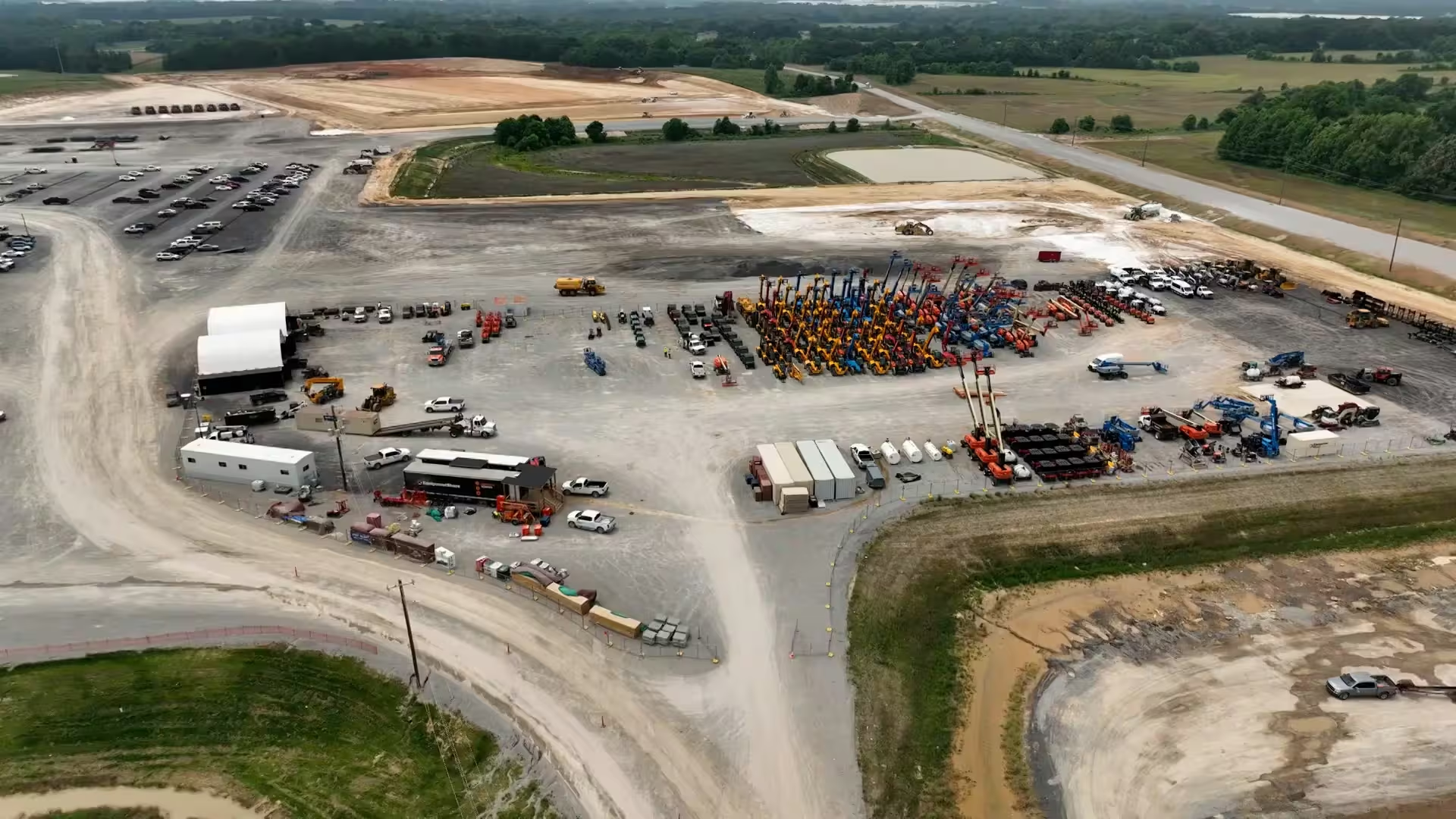
You directly own specific serial numbered equipment.
Assisted sourcing, placement, maintenance, insurance, and billing.
Opportunities limited to accredited participants.
PROGRAM LIFECYCLE
FORMATION
The participant forms an LLC to purchase and own the equipment within.
Selection
The LLC acquires specific units — telehandlers, excavators, dozers — from a pre-vetted queue.
Placement
Each unit is placed into the rental fleet and deployed to high-demand projects.
Management
Participants choose their level of involvement: enrollment options, maintenance review and approvals, placement preferences, and telematics reporting per serial number. Insurance is placed in the participant's own entity name, with administrative assistance available from Highground.
REVENUE
Rental revenue is shared with the owning LLC on the schedule set out in the program agreements. Net proceeds at disposition attach to the title holder.
Exit
At the end of the 72-month term, participants are supported by a remarketing and limited loss agreement to assist with exiting the program.
Program Highlights
REVENUE GENERATION
- Equipment owners are paid a rental revenue share on a flex platform schedule.
Market Insights

OWNING EQUIPMENT THE HIGHGROUND WAY
How the program is structured: a participant's own business entity purchases and holds title to a specific machine, with operational services provided under the program agreements.

THE BIG BEAUTIFUL BILL AND THE EQUIPMENT CYCLE
The One Big Beautiful Bill Act made full expensing permanent and raised the Section 179 ceiling. Alongside constrained supply and multi-year infrastructure programs, it describes the current backdrop for equipment ownership. Descriptive only — not tax or legal advice.

SECTION 179 AND BONUS DEPRECIATION FOR EQUIPMENT OWNERS
Full expensing is permanent again and the Section 179 ceiling is $2.5 million. A descriptive primer on how the two provisions generally operate and where the limitations sit. Not tax advice.